Bongo bango
| Dragon Quest monster | |
|---|---|
| Bongo bango | |
 Art by Akira Toriyama | |
| Japanese | ドンガラドン |
| Romaji | Dongaradon |
| First appearance | Dragon Quest XI |
The Bongo bango is a recurring monster in the series, first appearing in Dragon Quest XI. It is a monster percussionist that gives thunderous performances in stormy regions with its animated drum.
Characteristics[edit | edit source]
Bongo bangos are rotund red djinn-like spirits with large living drums made of dark green wood strapped to the front of their bodies with yellow rope. The spirits have solid yellow eyes, pointy ears, and tendrils on top of their heads. They float about in midair. Their open vests and wristbands are purple, while their drumsticks have the same dark green and yellow colour scheme as their drums. The sprightly drums have small yellow eyes and are constantly seen with a smile on their jagged mouths. Like their other percussionist kin, bongo bangos can be seen performing for their fellow monsters—scourgettes during the day and lurid lamplings at nighttime. Their vigorous drumming is capable of weakening the defences of their opponents, especially when they can perform in concert with another bongo bango. They will use their drumsticks as clubs to bludgeon foes and can call for backup for more of their kind in battle, as well.
Appearances[edit | edit source]
Dragon Quest XI: Echoes of an Elusive Age[edit | edit source]


Malicious[edit | edit source]
Dragon Quest Rivals[edit | edit source]
Bongo bango appeared in the fourth card pack, "Tales of Powerful Monsters" as a super rare card exclusive for Martial Artist leaders. Another card, known as "Turbulent Bongo Bango", appeared in the second True Set when the game's name changed to Rivals Ace as a super rare card common to all leaders.
In Other Languages[edit | edit source]
| Language | Translation | Meaning |
 Español Español | Bongo bango | Same as English name. Derived from bongó, a type of small drum of Afro-Cuban origin played by beating with the hands. |
 Français Français | Conga bongo | From conga, a tall, narrow-headed Cuban drum of African origin. |
 Deutsch Deutsch | Bongo bango | Same as English name. Derived from bongó, a type of small drum of Afro-Cuban origin played by beating with the hands. |
Gallery[edit | edit source]
-
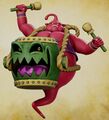 XI polygon model
 -
 A malicious bongo bango
 -
 Rivals card
 -
 Turbulent Bongo Bango Rivals card


