Hero: Difference between revisions
| Line 29: | Line 29: | ||
*[[Hero (Dragon Quest II)]]: The Prince of Midenhall | *[[Hero (Dragon Quest II)]]: The Prince of Midenhall | ||
*[[Hero (Dragon Quest III)]]: [[Erdrick]] | *[[Hero (Dragon Quest III)]]: [[Erdrick]] | ||
*[[Hero (Dragon Quest IV)]]: Solo (Male)/Sofia (Female) | *[[Hero (Dragon Quest IV)]]: Solo (Male) / Sofia (Female) | ||
*[[Hero (Dragon Quest V)]]: Madason | *[[Hero (Dragon Quest V)]]: Madason | ||
*[[Hero (Dragon Quest VI)]] | *[[Hero (Dragon Quest VI)]] | ||
| Line 48: | Line 48: | ||
*[[Luceus]] and [[Aurora]], the hero and heroine of {{DQH|short}}. | *[[Luceus]] and [[Aurora]], the hero and heroine of {{DQH|short}}. | ||
*[[Teresa]] and [[Lazarel]], the heroes of {{DQH2}}. | *[[Teresa]] and [[Lazarel]], the heroes of {{DQH2}}. | ||
*[[Hero (Dragon Quest of the Stars)|Harte, Sand & Aqua]], the playable trio from {{DQStars}}. | |||
*[[Hero (Super Smash Bros.)]], the character who represents the {{Main Series}} franchise in {{SSB5}}. Their default form is The Luminary from {{XI}}, while alternate forms consist of the ones from {{III}}, {{IV}} and {{VIII}}. | *[[Hero (Super Smash Bros.)]], the character who represents the {{Main Series}} franchise in {{SSB5}}. Their default form is The Luminary from {{XI}}, while alternate forms consist of the ones from {{III}}, {{IV}} and {{VIII}}. | ||
*[[Dai | *[[Dai]] from {{DQDai}} manga series. | ||
*[[Arus]] from the ''[[Emblem of Roto]]'' manga series. | *[[Arus]] from the ''[[Emblem of Roto]]'' manga series. | ||
*[[Abel]] from the ''[[Dragon Quest: Abel Yuusha|Legend of the Hero Abel]]'' anime series. | *[[Abel]] from the ''[[Dragon Quest: Abel Yuusha|Legend of the Hero Abel]]'' anime series. | ||
Latest revision as of 14:42, 28 July 2026
 |
This is a disambiguation page which serves to distinguish topics that share a common name. |

In Dragon Quest, Hero usually refers to the main character/protagonist of a Dragon Quest game. However, there are some exceptions, with some other characters being labelled Hero instead.
There can be some discrepancies between the games and languages and how the words are used (as explained below). As such, it can create a lot of confusion and so, for convenience and clarity purposes, we refer to as Hero the different protagonists of the series.
Hero as a title[edit | edit source]
In this case, the Hero (勇者, yūsha) is a specific title usually given to the protagonist.
While it is a title that has mostly been given to the protagonists of their respective games, there has been exceptions. In Dragon Quest V and Dragon Quest X , this title of Hero is for the protagonist's son and Anlucia respectively. In a way, the protagonists of those games are not the Hero for the story.
Discrepancies with the localization[edit | edit source]
The localization of the word has also not always been consistant.
While in older entries, the word 勇者 (yūsha) was always Hero, in Dragon Quest XI it became Luminary instead (albeit pointing to the same title). Also, while Dragon Quest X has not had an official localization in itself, other elements such as Dragon Quest Tact characters or the description of Dragon Quest X Offline on the PS Store indicates a larger descripancy with Anlucia being sometimes called Hero, or sometimes Luminary.
To note that the "hero-meaning" Luminary has nothing to do with the Luminary vocation, which is the localization for the Japanese "superstar".
As the Japanese word 勇者 (yūsha) did not always become Hero, it is also true the other way around: there has been cases where the localization would mention the word Hero for other characters. For those cases, those characters were referred to as 英雄 (eiyū) in the Japanese text, which can also be fairly translated as hero. These characters include:
- Sir Mervyn from Dragon Quest VII
- Greygnarl from Dragon Quest IX
- Hendrik from Dragon Quest XI
Main Characters[edit | edit source]
Main-series games[edit | edit source]
- Hero (Dragon Quest)
- Hero (Dragon Quest II): The Prince of Midenhall
- Hero (Dragon Quest III): Erdrick
- Hero (Dragon Quest IV): Solo (Male) / Sofia (Female)
- Hero (Dragon Quest V): Madason
- Hero (Dragon Quest VI)
- Hero (Dragon Quest VII)
- Hero (Dragon Quest VIII)
- Hero (Dragon Quest IX)
- Hero (Dragon Quest X)
- Hero (Dragon Quest XI): The Luminary
Spinoff and other games[edit | edit source]
- Hero (Dragon Quest Swords)
- Hero (Dragon Quest Monsters: Joker)
- Hero (Dragon Quest Monsters: Joker 2)
- Hero (Dragon Quest Monsters: Joker 3)
- Rocket, a Slime and Hero of Dragon Quest Heroes: Rocket Slime.
- Terry, as the Hero in Dragon Quest Monsters
- Kiefer, as the Hero in Dragon Quest Monsters: Caravan Heart
- Luceus and Aurora, the hero and heroine of Dragon Quest Heroes.
- Teresa and Lazarel, the heroes of Dragon Quest Heroes II.
- Harte, Sand & Aqua, the playable trio from Dragon Quest of the Stars.
- Hero (Super Smash Bros.), the character who represents the Dragon Quest franchise in Super Smash Bros. Ultimate. Their default form is The Luminary from XI, while alternate forms consist of the ones from III, IV and VIII.
- Dai from Dragon Quest: The Adventure of Dai manga series.
- Arus from the Emblem of Roto manga series.
- Abel from the Legend of the Hero Abel anime series.
Other Characters[edit | edit source]
- Avan from Dragon Quest: The Adventure of Dai, the former hero who defeated the Dark Lord Hadlar 15 years prior to the main story.
- Nova from Dragon Quest: The Adventure of Dai, the self-proclaimed Northern Hero.
Character Classes[edit | edit source]
- Hero (vocation) - One of the vocations that a party member can become in Dragon Quest VI and VII.
Gallery[edit | edit source]
-
 Heroes & their allies from Dragon Quest I-V.
 -
 Heroes I-VII art for "Symphonic Suite DQ: The Best 2".
 -
 Dragon Quest Heroines.
 -

-
 Dragon Quest Museum art.
 -
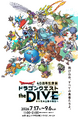 40th Anniversary artwork.
 -
 Final Smash from Super Smash Bros. Ultimate including the various Heroes.
 -
 Heroes of Stars.
 -

-

-

-


